
Story and tone
In June, Netflix released a new animated series with the very eloquent title “K-Pop Demon Hunters.” The unexpected combination of music and action instantly won the hearts of fans around the world. We’ll tell you what makes this series so appealing and try to figure out how realistic it is.
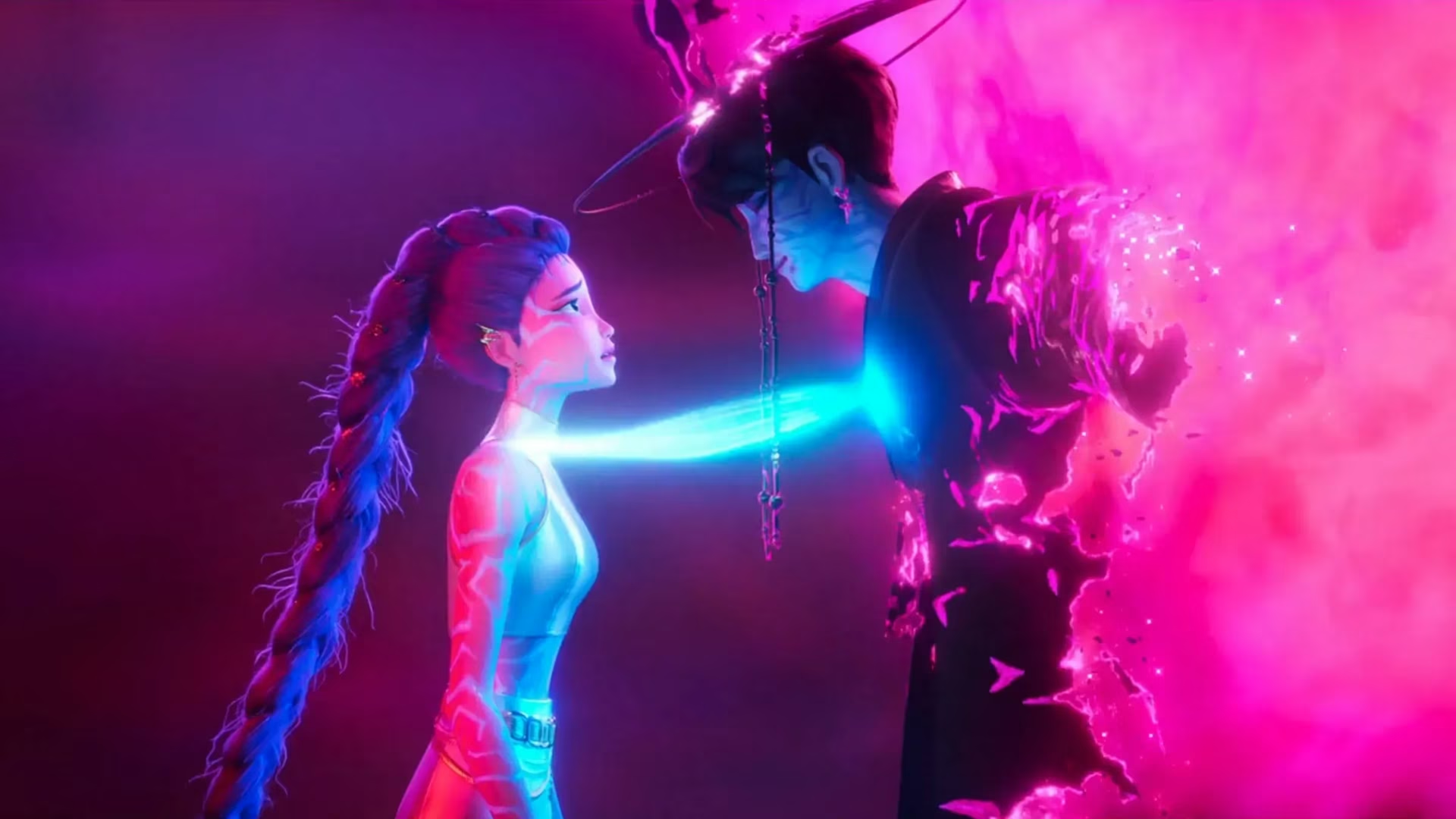
Since ancient times, Earth has been under attack by demons. At times, girls with unusual voices defend it, using their magical vocals to repel outside threats. In this generation, the K-pop trio Huntr/x captivates global audiences while actively fighting aliens.
Before a crucial concert can seal the rift, demons counter by launching the boy band Saja Boys, copying their rivals’ tactics. So they will have to fight the enemy not only on the battlefield, but also in the music charts.
Music and sound
Why did they choose K-pop? We have Maggie Kang (who, incidentally, is one of the film’s directors) to thank for that: she has always emphasized in various interviews how important her heritage is to her.
Music is often featured in Korean religious rituals, which is where the idea of guardians came from. As for K-pop, it’s simply a reflection of the times: the genre could have been different, but it’s just a natural tribute to popularity.
The music as a whole reflects trends well and fits into pop culture – to such an extent that the characters’ vocal parts were performed by members of the real (and popular!) group Twice. Their opponents, the Saja Boys, were also voiced by real K-pop artists.
The film’s soundtrack is appropriate – authentic and… somewhat faceless. To the uninformed listener, the tracks may seem more like American pop music, but a more attentive and knowledgeable viewer will notice numerous references to Twice, Super Junior, and MEOVV.
Themes
Yes, K-Pop Hunters explores generational trauma, the sins of fathers, and the mistakes of the past that people must learn to let go of themes that often appear in one form or another in the company’s projects.
However, the cartoon still draws clear boundaries, making it clear that not everything deserves forgiveness. Hunters does not portray the demons as positive characters: sin remains sin, and responsibility for it does not disappear, no matter how likable the sinner may seem to you.
“K-pop hunters” take a more subtle approach, avoiding blunt metaphors and attempts to equate entire social groups with monsters. One of the key motifs explores reflections on origin, and the story presents the mixed blood of humans and demons as an innate flaw, which the heroines only accept at the very end.
You can assume that Maggie Kang’s own experience served as the starting point for the plot: after she moved to Canada, people likely perceived her as an outsider, and this experience found its reflection in The Hunters. Such experiences are universal for migrants in general, which resonates well with the overall international nature of the project.
Visual imagination
Excellent animation with reduced-frame-rate, jerky 3D – à la Spider-Man: Into the Spider-Verse – sets it apart.
“K-Pop Hunters” embraces cartoon exaggeration over realism, with expressive gags and puppet-like, stop-motion-inspired movement. In action scenes, this naturally takes a back seat, and the animation becomes much smoother.
Even if the music feels inaccessible, the plot, characters, and style elevate the cartoon significantly.
As a result, the soundtrack, however unmemorable it may be, harmonizes well with the events on the screen and, oddly enough, works primarily because the choreography of the dances and battles perfectly matches the music.
The film keeps the battles within the PG-13 rating without losing their dynamism: the fights move at a fast pace, and the “teen” rating remains intact because the demons stylishly disintegrate into purple sparks instead of spilling any blood.
Final verdict
Watching “K-Pop Hunters” is exciting, and following the dynamics is also exciting, and the numerous hooks scattered here and there hint that it will not end with just one film. It will be interesting to see what changes in the second film.
Discussion (0)